
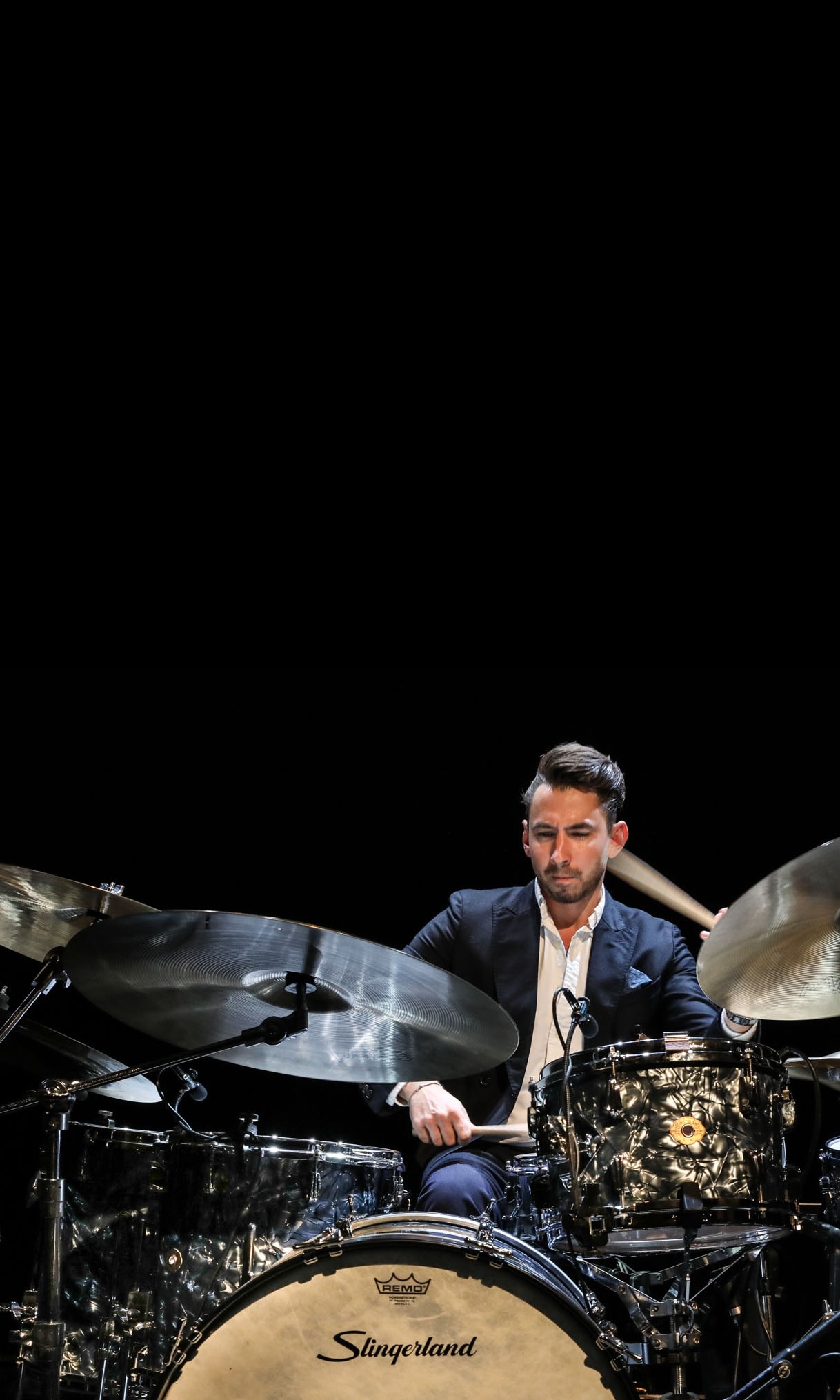
Slingerland Soundcheck
Ed "Roddy" Richardson: Throw A Dart At The Map
Currently enjoying some downtime in Derbyshire between major U.K. tours, Ed shares road stories, career highlights, and why his Slingerland Radio Kings have become an essential part of the journey.
BY JUSTIN LISA // SEPTEMBER 30, 2026
JL: Tell us a little about yourself and who you’re playing with.
ED: I’m Ed “Roddy” Richardson, a U.K.-based drummer currently on the road with Jools Holland’s Rhythm & Blues Orchestra. I’ve also worked as a songwriter and performer on RAYE’s latest record, This Music May Contain Hope and played with artists including Van Morrison and Mike Stern. I’ve done studio work for Taylor Swift, and I’m still a house drummer at Ronnie Scott’s Jazz Club in London.
JL: Where are you right now, and where are you headed next?
ED: I’m at home in Derbyshire, between tours. I’ve just spent a couple of weeks in Greece getting some rest before the busy season starts, so right now it’s lots of golf and chilling out. Next, I’m touring with the Royal Philharmonic Orchestra, playing the music of Burt Bacharach, and then heading back out with Jools. Both tours are around the U.K.—throw a dart at the map and chances are I’m going to be there.
JL: Any recent stories from the road?
ED: Ronnie Wood has turned up a few times recently and decided to sit in with the band. I’ve worked with him a lot over the years, and he always brings amazing energy. Sometimes you’re on a random gig and suddenly it’s, “Oh, Ron’s here. Great!” And, of course, he’s part of The Rolling Stones, which is always pretty cool.
“It seems like everywhere is a sweet spot on those drums.”
JL: What’s your current Slingerland setup?
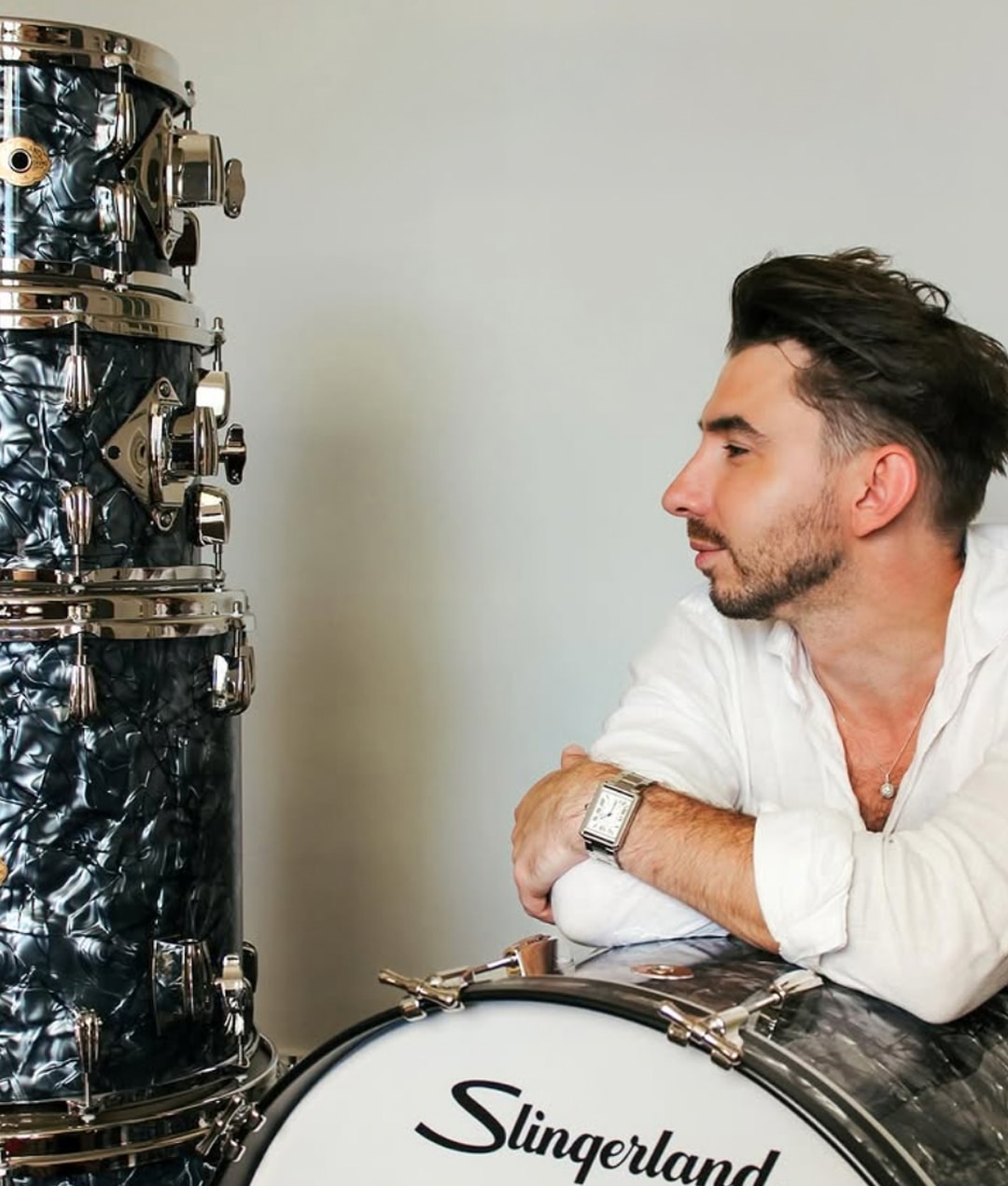
ED: I’m playing Radio Kings: a 22 × 14 bass drum, 10 × 7 and 12 × 8 rack toms, 14 × 14 and 16 × 16 floor toms, and a 14 × 6½ snare. The full setup doesn’t come out that often—it depends on the gig. With the Philharmonic, it’s one up, one down; with Jools, one up, two down; and for some sessions, two up, two down. I also use a little 13" DW Collector’s snare, cranked up for a timbale-like sound on some of the ska tunes in Jools’ show.
JL: What first drew you to Slingerland?
ED: I’ve owned a vintage Slingerland kit for about 15 years and have always loved the drums. Then you look at the players associated with the brand: Buddy Rich, Gene Krupa, JR (John Robinson)—all drummers I really admire. Kenny Clare was a huge inspiration to my dad, and he passed that on to me. It’s amazing to be involved with a brand connected to so many players I respect. But the main thing is that the drums sound amazing.
“These have that vintage sound, and everything works.”
JL: What do you enjoy most about your Radio Kings?
ED: They’re the best drums I’ve ever played. They cover all the bases but still have that vintage vibe I love. My old Slingerland kit sounds amazing, but the fittings are old—the floor tom legs were held up with cable ties! These have that vintage sound, and everything works. They tune up great, they tune down great. It seems like everywhere is a sweet spot on those drums.
JL: How do you adapt the drums to different gigs?
ED: For the Bacharach shows with the Philharmonic, I’m going a little more muffled and less open than normal, because that suits the music. With Jools, it’s a super old-school big band: open, ringy, let everything sing. Just let the drums do the talking. It depends entirely on what I’m playing.
"When Ronnie Wood turns up, it's full rock 'n' roll. I get to be Charlie Watts for a little while."
JL: What’s it like playing with Jools Holland?
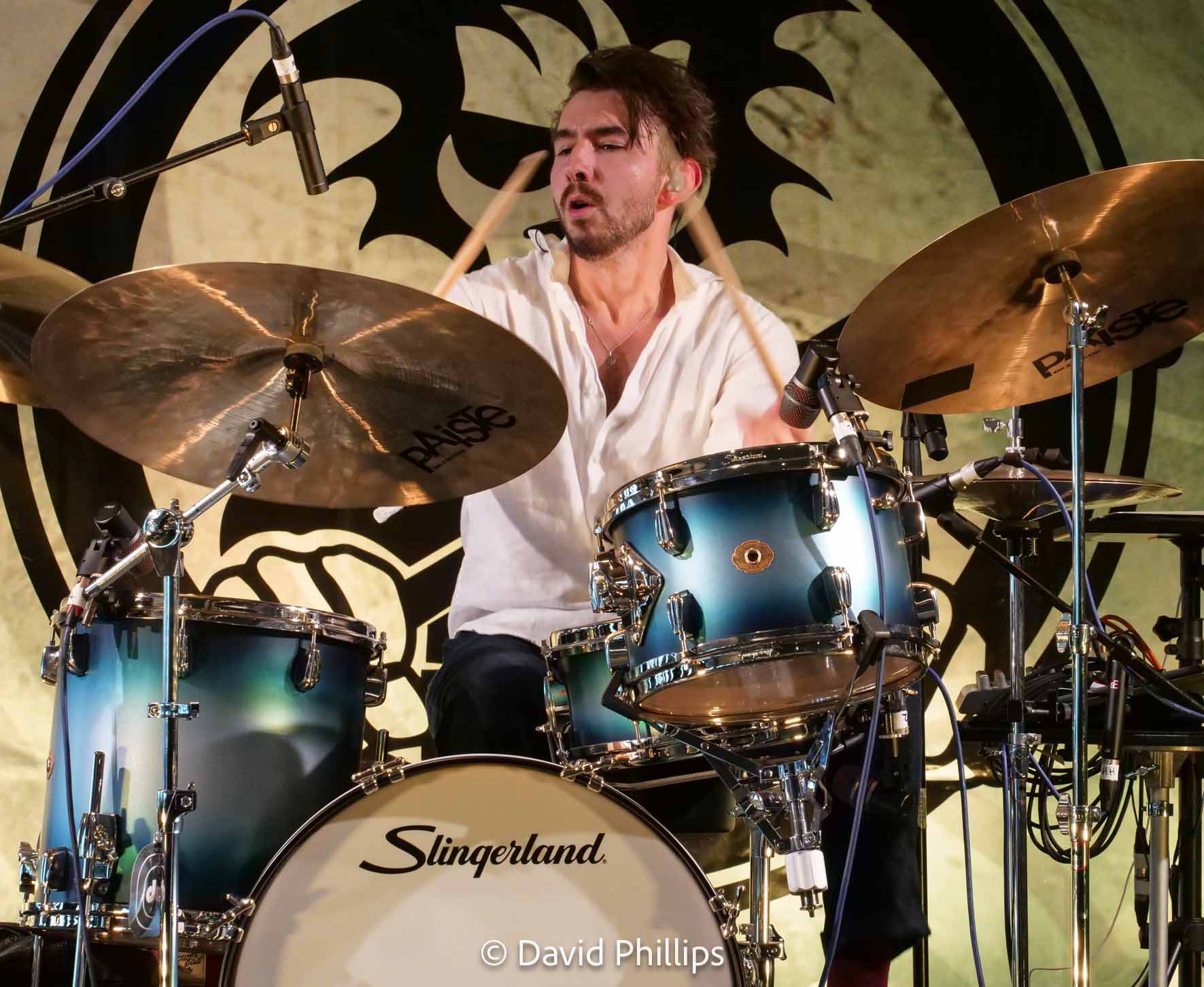
ED: The variety is the best part. My background is mostly big-band drumming, but I also play pop and rock, and that gig lets me wear all those different hats. When Ronnie Wood turns up, it’s full rock ’n’ roll—I get to be Charlie Watts for a little while. You never quite know who'll be there, especially for the Hootenanny, so you have to stay on it and take care of business. We also do one soundcheck at the beginning of the tour, then the crew handles the rest. That’s pretty amazing.
JL: What stood out about recording with Van Morrison?
ED: He knows exactly what he wants. If something isn’t right, he stops you straight away and gives clear instructions. Sometimes you might wonder about an idea, but then you listen back in the control room and realize he was exactly right. We were all recording in the same room, with ideas developing as we went. My friend Chris Hill was on bass, quietly writing out the chords as Van played them. By the time Van wanted to start, we were ready. We cut about 13 tracks in a day. When you get the right people in the right room, it’s a wonderful thing.
JL: What keeps you putting on shows with your own big band?
ED: There’s so much amazing big band music out there that doesn’t get played live. I choose the tunes I want to play, then track down the original charts or ask friends to transcribe them. It’s a labor of love—I don’t make money doing it, but that’s not why I do it. I want to make sure that music is still being played.
Recommended for you

Gene Krupa and Slingerland: An Iconic Partnership
Slingerland Legacy

EP 1: Griffin Goldsmith
Slingerland Timekeepers

Kevin Rapillo: Packing a Bag for Tonight's Bus
Slingerland Soundcheck

Radio King Outfit
Handcrafted heritage.

LA LOM - Café Tropical
Slingerland Sessions

Snare Drums
Timeless sound, modern craft.

Parts and Accessories
Your classic drums. Reborn.

About Slingerland
Welcome to the legacy.